You swept the porch clean last week. Now there’s a fresh web strung across the doorway, another tucked into the corner of the railing, and a third stretched between the porch light and the siding. If it feels like spiders have suddenly taken over your home overnight, you’re not imagining it. Late summer and early fall is peak spider season in Alaska, and there’s a very specific reason why.
This isn’t random bad luck. It’s a predictable seasonal pattern tied to breeding cycles, dropping temperatures, and spiders actively searching for shelter before winter sets in. Understanding why it happens is the first step to actually getting ahead of it, instead of just knocking down webs every few days and watching them reappear.
Why Spider Activity Spikes This Time of Year
Spiders have been quietly growing and reproducing all summer, mostly out of sight. By late summer and into fall, several things happen at once that make them suddenly much more visible around your home.
Here’s what’s driving the surge:
- Spiders reach full maturity. Many species spend the summer growing, and by fall they’re at their largest and most active size, which makes existing webs bigger and new ones more noticeable.
- It’s breeding season. Male spiders leave their webs to actively search for mates, which means more spiders wandering into open areas like porches, doorways, and lit exterior walls.
- Porch lights become a magnet. Exterior lighting attracts flying insects at night, and spiders are simply following the food source, which is exactly why webs tend to cluster around porch lights, entryways, and windows.
- Cooling temperatures push them toward shelter. As nighttime temperatures start to drop, spiders instinctively seek out warmer, more protected spaces, and the gaps, eaves, and corners of your home look very appealing.
In other words, it’s not that Alaska suddenly has more spiders in the fall. It’s that the spiders that have been there all along are bigger, more active, and actively moving toward your house at exactly the same time.
The Species You're Most Likely Seeing
Most of the web activity showing up around Alaska porches this time of year comes down to a small handful of common species.
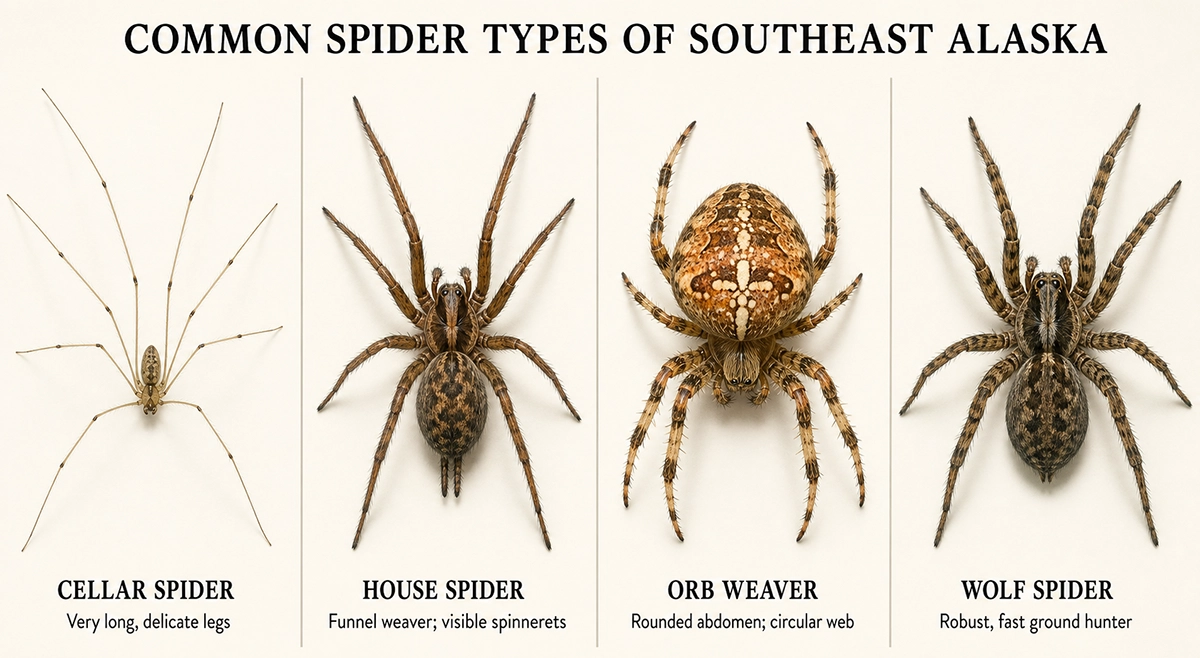
Typically seen around homes in Southeast Alaska:
- Cellar spiders: long, thin-legged spiders that build loose, messy webs in corners, crawl spaces, and dark porch areas
- House spiders: common around door frames, windowsills, and siding, building irregular tangled webs in sheltered corners
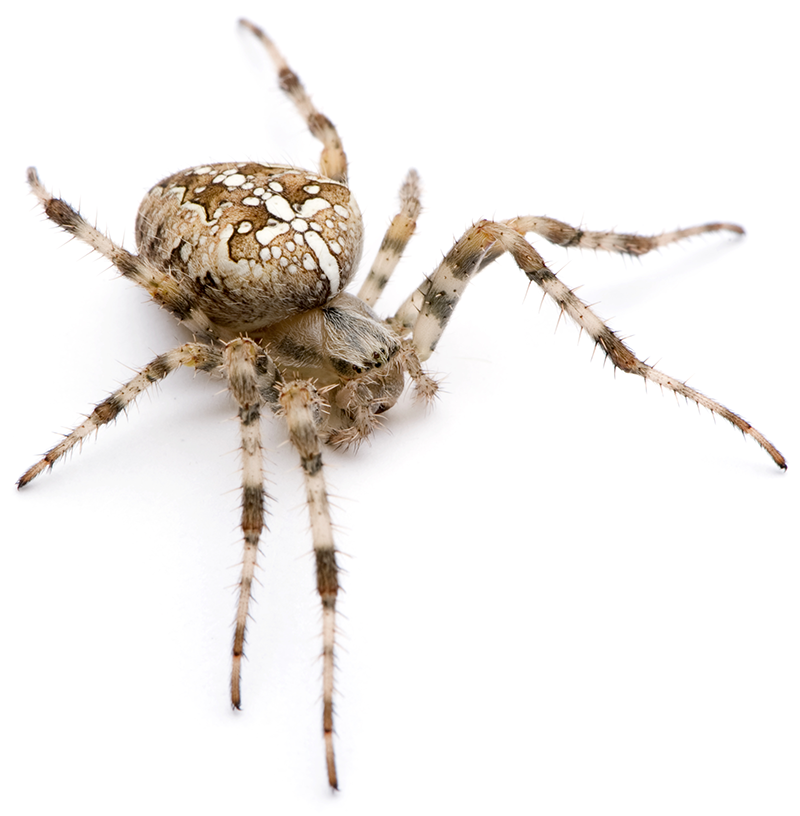
- Orb-weaver spiders: known for their large, classic circular webs, often rebuilt fresh each night, which is why you might sweep one down only to find it back the next morning
- Wolf spiders: not web-builders, but often seen wandering porches and foundations this time of year as they search for shelter and mates
The good news: most of what you’re seeing around a typical Alaska porch is more of a nuisance than a genuine threat. But heavy spider activity is also a signal worth paying attention to, because spiders don’t show up in large numbers for no reason.
Why More Spiders Often Means Another Pest Problem
This is the part most homeowners miss. Spiders are predators. They don’t gather somewhere unless there’s something for them to eat. A sudden increase in spider webs around your porch, siding, or entry points is often a sign that flying or crawling insects have already established themselves nearby.
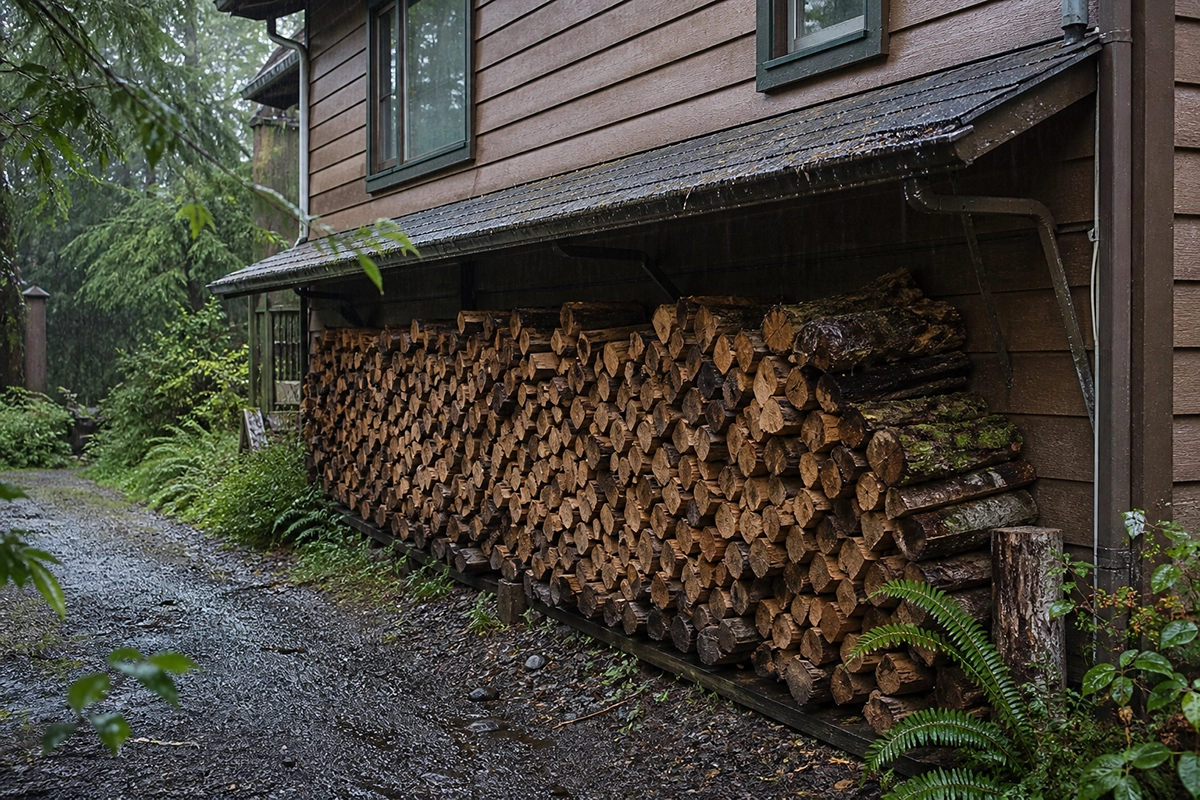
Common underlying attractions include:
- Flies, moths, or other insects drawn to exterior lighting
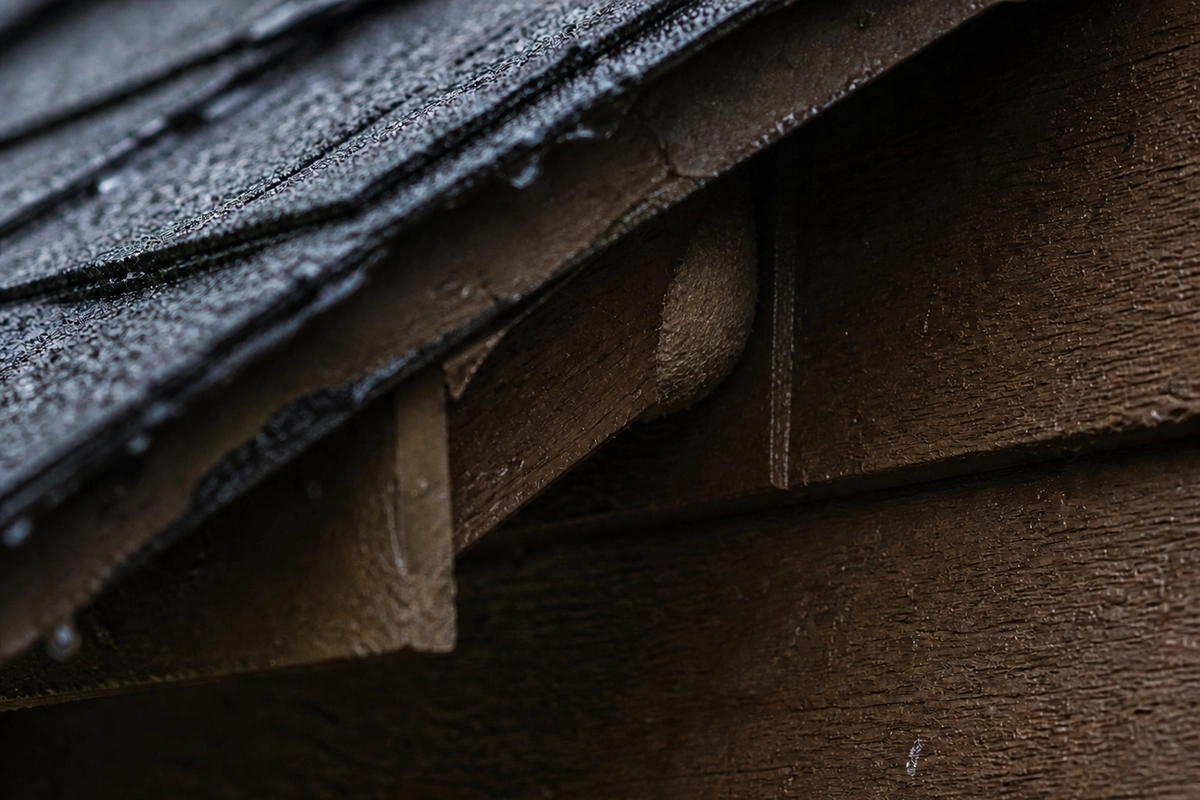
- Gaps, cracks, or vents that are letting other pests into the structure
- Woodpiles, debris, or clutter near the foundation providing shelter for insects
- Moisture issues around the porch, eaves, or foundation attracting insect activity
If you’re seeing a heavy concentration of webs in one specific area, say around a particular corner of the porch or a certain section of siding, that’s often worth a closer look, because it may be pointing you toward a bigger insect issue rather than a standalone spider problem.
What You Can Do Right Now
A few simple changes can meaningfully cut down on late-season spider activity without needing a full treatment.
Try these first:
- Switch porch lights to yellow “bug light” bulbs, which are far less attractive to the flying insects spiders feed on
- Sweep down webs regularly and consistently, as spiders are less likely to rebuild in a spot that’s constantly disturbed
- Seal visible gaps around doors, windows, siding, and foundation vents
- Move firewood, debris, and clutter away from the base of the house
- Trim back vegetation and branches touching the siding or roofline, which spiders use as bridges toward the house
These steps help, but they’re managing the symptom, not necessarily the underlying cause. This is especially true if the real issue is an active insect population feeding an ongoing spider presence.
When It's Time to Call a Professional
A web or two on the porch is normal. Persistent, heavy webbing that keeps returning within days, especially when paired with spiders indoors, egg sacs, or a noticeable insect presence, is usually a sign that DIY measures aren’t going to solve the underlying problem.
Signs it’s time for a professional inspection:
- Webs rebuilding repeatedly in the same spots within a day or two of clearing them
- Spiders showing up regularly inside the home, not just on the porch or exterior
- Visible egg sacs, which mean the population is actively growing, not just passing through
- A noticeable increase in flying insects around lights or windows alongside the spider activity
As the leading pest control company in Southeast Alaska with over 30 years of experience, we know exactly what late-season spider activity in this region typically points to, and how to treat both the spiders and whatever insect activity may be drawing them in. A proper inspection identifies entry points, addresses the underlying attraction, and applies targeted treatment where it actually matters, rather than just knocking down webs that will be back within the week.
Don't Let It Build Through the Fall
Late-season spider activity isn’t something that just fixes itself once the weather cools further. In many cases, it’s the calm before an even bigger push indoors as temperatures continue to drop. Getting ahead of it now, while it’s still a porch problem and not a “spiders in the house” problem, is the easiest and most cost-effective time to act.
If your porch has turned into a nightly web-rebuilding project, it’s worth finding out what’s really behind it. Our team offers thorough inspections and targeted treatments built specifically for Alaska’s seasonal pest patterns, plus ongoing subscription service plans to keep spiders and the insects that attract them from taking over again next year.
Webs taking over your porch faster than you can clear them? Contact Alaska Pest Management today for a professional inspection before it moves indoors.