It starts small. One resident in a Juneau apartment building spots a roach scurrying behind the stove late at night. They figure it’s a one-off, maybe something that hitched a ride in a grocery bag, and they don’t think much of it. A few weeks later, their next-door neighbor sees one too. Then another unit. Then another.
By the time a property manager finally gets involved, what looked like an isolated nuisance has turned into a building-wide infestation, and now every tenant, every unit, and every dollar of the property’s value is affected by a problem that technically started in someone else’s kitchen.
This scenario plays out more often than most renters and landlords realize, and it’s especially relevant in Juneau, where multi-family housing, older buildings, and shared walls are the norm rather than the exception. Understanding why one apartment’s roach problem doesn’t stay contained, and what to do about it, can save residents and property owners a lot of money, stress, and sleepless nights.
Cockroaches Don't Respect Walls, Leases, or Boundaries
The biggest misconception about apartment pest problems is that they stay put. A cockroach doesn’t know (or care) where one unit ends and another begins. In multi-family buildings, especially older construction common throughout Juneau, apartments share far more than a hallway. They share plumbing lines, electrical conduits, HVAC systems, and wall cavities that run continuously from one unit to the next.
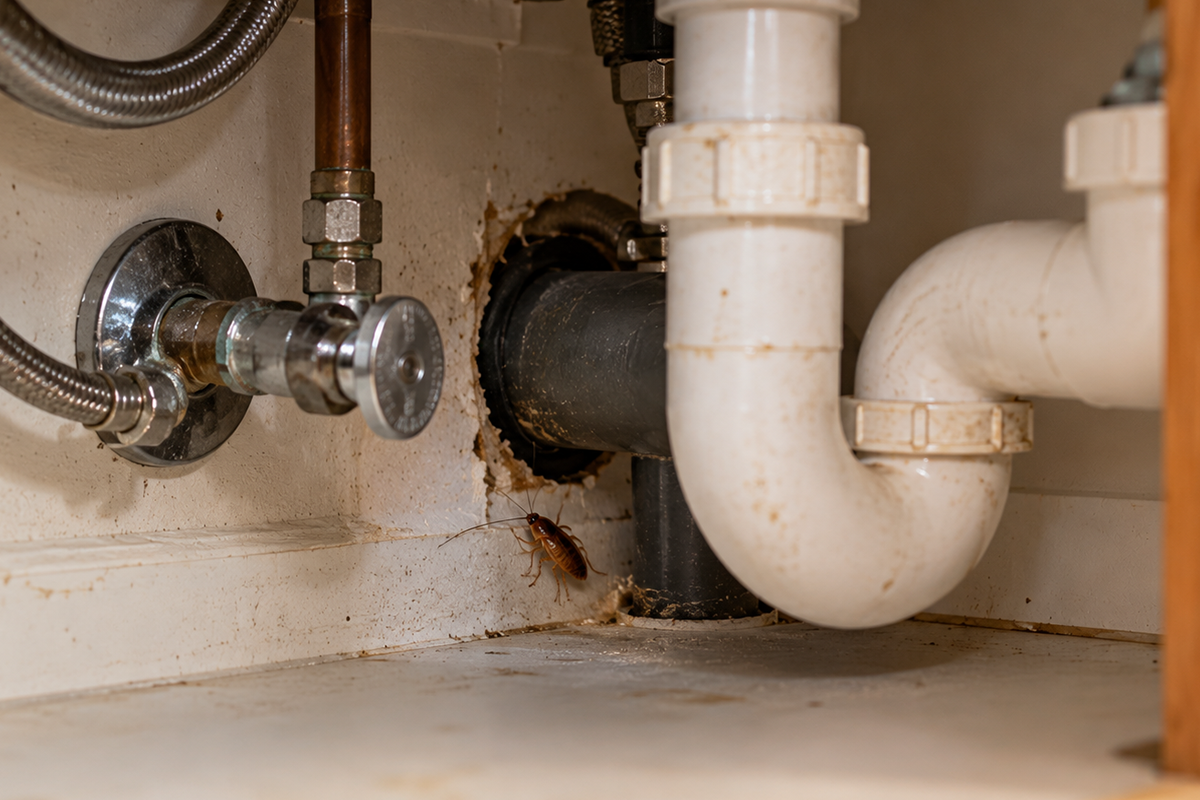
The biggest misconception about apartment pest problems is that they stay put. A cockroach doesn’t know (or care) where one unit ends and another begins. In multi-family buildings, especially older construction common throughout Juneau, apartments share far more than a hallway. They share plumbing lines, electrical conduits, HVAC systems, and wall cavities that run continuously from one unit to the next.
To a cockroach, those shared structures aren’t barriers. They’re highways.
German cockroaches, by far the most common species found in apartment buildings, are especially good at exploiting these connections. They’re small, fast-breeding, and can squeeze through gaps as thin as a matchbook. Pipe chases behind sinks, gaps around electrical outlets, spaces beneath baseboards, and shared plumbing risers all give roaches a direct route from one unit into the next, often without ever being seen in a hallway or common area.
This is why a roach problem that starts in a single unit rarely stays there for long. It’s not a matter of if it spreads to neighboring apartments. It’s a matter of how fast.
The Math Behind Why It Escalates So Quickly
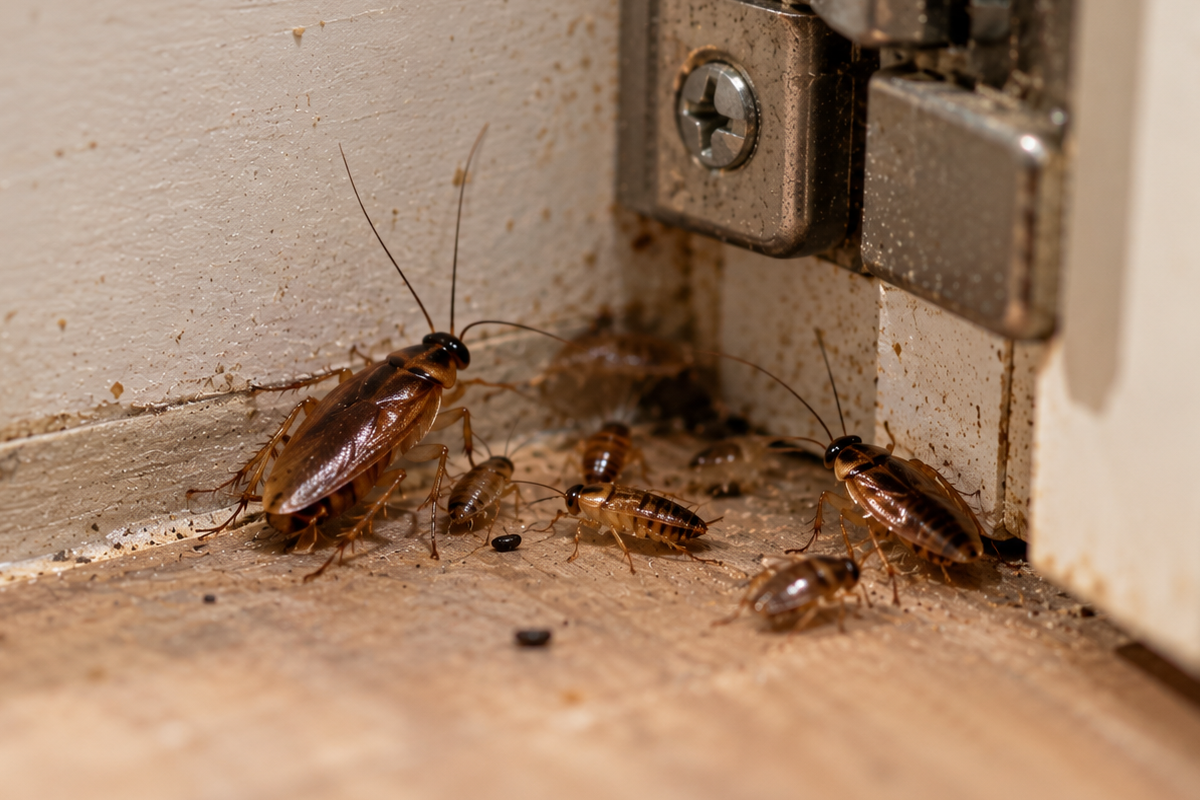
Cockroaches are notorious for how fast their populations grow, and understanding the numbers helps explain why “it’s just one unit” can turn into “it’s the whole building” faster than most people expect.
A single female German cockroach can produce an egg capsule containing 30–40 eggs, and she can produce several of these capsules in her lifetime. Under the right conditions (warmth, moisture, and access to food), a small handful of roaches can multiply into hundreds within just a few months. In an apartment setting, where food sources (even small crumbs or grease residue), water, and warmth are abundant, conditions are almost always “right.”
Now add the building factor: as that population grows and resources in the original unit become scarce or overcrowded, roaches naturally disperse to find new territory. That dispersal doesn’t happen through the front door. It happens through the walls, pipes, and voids connecting adjacent units. One overcrowded apartment becomes the source population for several newly infested ones, and the cycle repeats.
By the time multiple tenants are reporting sightings, property managers are often dealing with an infestation that’s had months to establish itself across several units, not a fresh, isolated problem.
Why Juneau Buildings Are Particularly at Risk
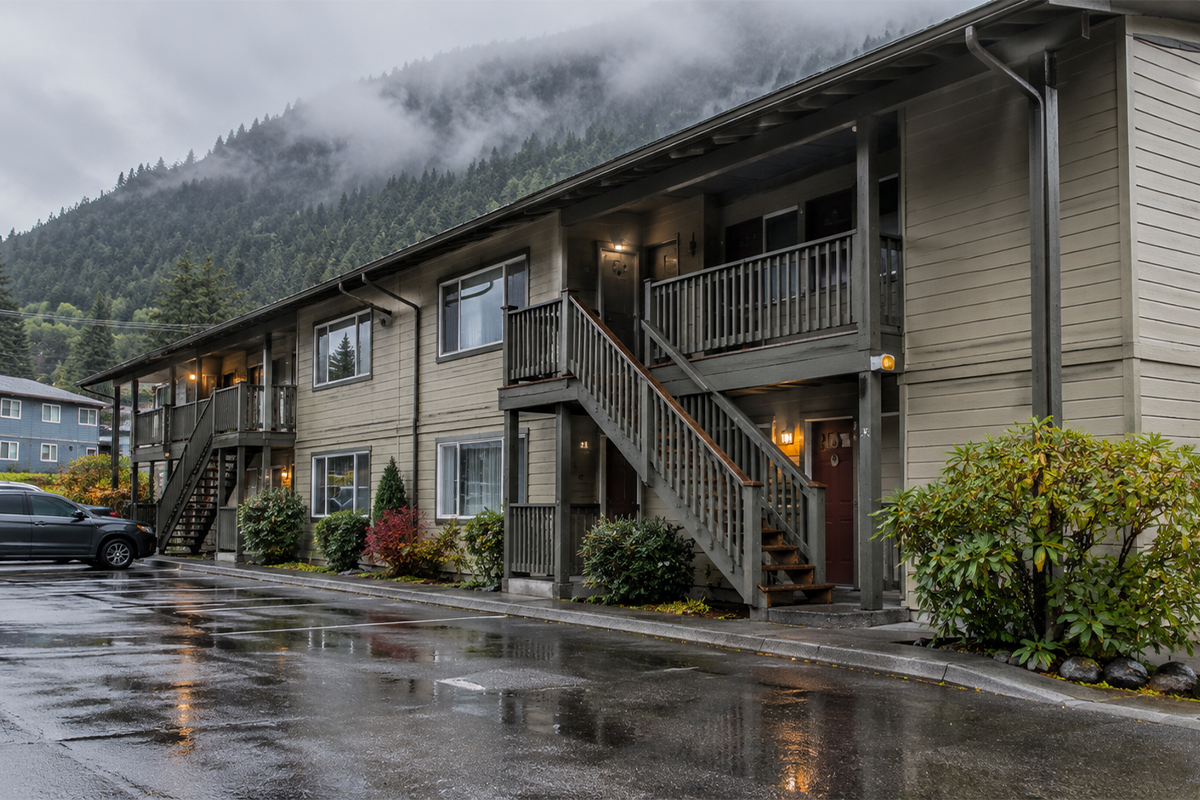
Juneau’s housing stock adds a few extra factors into the mix that make apartment roach problems spread faster than in some other markets:
- Older buildings with aging infrastructure. Many multi-family properties in Juneau were built decades ago, and older plumbing and wall systems tend to have more gaps, cracks, and access points than newer construction.
- Humidity and moisture. Southeast Alaska’s wet climate means many buildings deal with elevated indoor humidity, which cockroaches thrive on. Moisture-prone areas like laundry rooms, boiler rooms, and shared basements can become roach highways in their own right.
- Density of multi-family housing. With limited buildable land in much of Juneau, apartment buildings and multi-unit properties are common, meaning more shared walls, more shared systems, and more opportunity for pests to move unit to unit.
- Seasonal behavior. As temperatures drop in the fall and winter, roaches, like many pests, seek out warm, sheltered environments, making indoor infestations more likely to take hold and persist through the colder months.
None of this means every Juneau apartment building is destined for a roach problem. But it does mean that once one starts, the conditions are often in place for it to spread quickly if it isn’t addressed at the building level.
Why Treating Just One Unit Doesn't Solve the Problem
This is the part that trips up a lot of well-meaning tenants and even some property managers: treating a single infested unit, on its own, almost never solves the underlying issue.
Here’s why. If roaches have already established populations in the walls, plumbing chases, or voids connecting multiple units, treating only the unit where they were first spotted just pushes the surviving population sideways, into neighboring apartments that haven’t been treated yet. It’s the pest control equivalent of squeezing a balloon: the problem doesn’t disappear, it just relocates.
This is why single-unit, DIY treatments (foggers, over-the-counter sprays, store-bought bait stations) tend to fail in apartment settings even when they show some initial results. They may knock down the visible population in one unit temporarily, but they don’t address the roaches hiding in wall voids or the ones that have already moved next door. A few weeks later, the “solved” unit gets reinfested from an adjacent apartment, and the cycle starts all over again.
Effective cockroach control in multi-family housing almost always requires a building-wide approach: inspecting and treating not just the unit where the problem was reported, but neighboring units, shared mechanical spaces, and common areas connected by the same structural pathways.
What Property Managers and Landlords Should Watch For
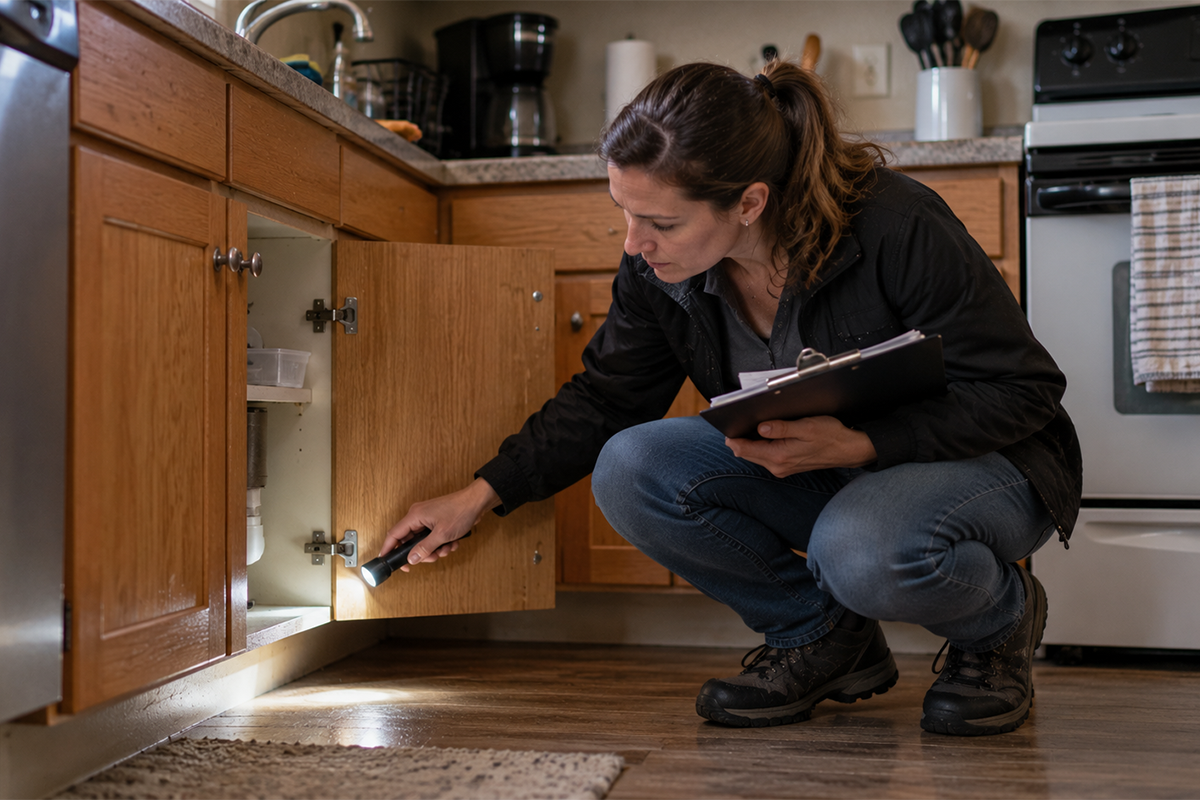
For property managers and landlords in Juneau, staying ahead of a roach problem means paying attention to early warning signs across the whole property, not just responding to individual tenant complaints in isolation.
Signs worth investigating include:
- Multiple, separate tenant reports of roach sightings within a short window of time
- Roach droppings (small, dark specks resembling coffee grounds or pepper) near sinks, stoves, or baseboards
- A musty, oily odor in kitchens or bathrooms, which can indicate a larger population
- Egg capsules (oval, brownish cases) found in cabinets, behind appliances, or along baseboards
- Roach activity reported in shared spaces like laundry rooms, boiler rooms, or trash areas
When any of these signs show up in more than one unit, or in shared building spaces, it’s a strong indicator that the problem has already spread beyond its original source, and that a single-unit response won’t be enough.
What Tenants Can Do
Tenants aren’t powerless in this either. A few habits make a real difference in whether a minor sighting turns into a full-blown infestation:
- Report sightings immediately, even a single roach. Early reporting gives property management the best chance to treat the problem before it spreads.
- Reduce food and moisture sources by cleaning up crumbs and spills, storing food in sealed containers, and fixing leaky faucets promptly.
- Seal obvious gaps around baseboards, outlets, and under sinks where possible.
- Avoid DIY foggers (“bug bombs”), which often scatter roaches into neighboring units rather than eliminating them. That’s the opposite of what you want in a shared building.
The Building-Wide Solution: Integrated Pest Management
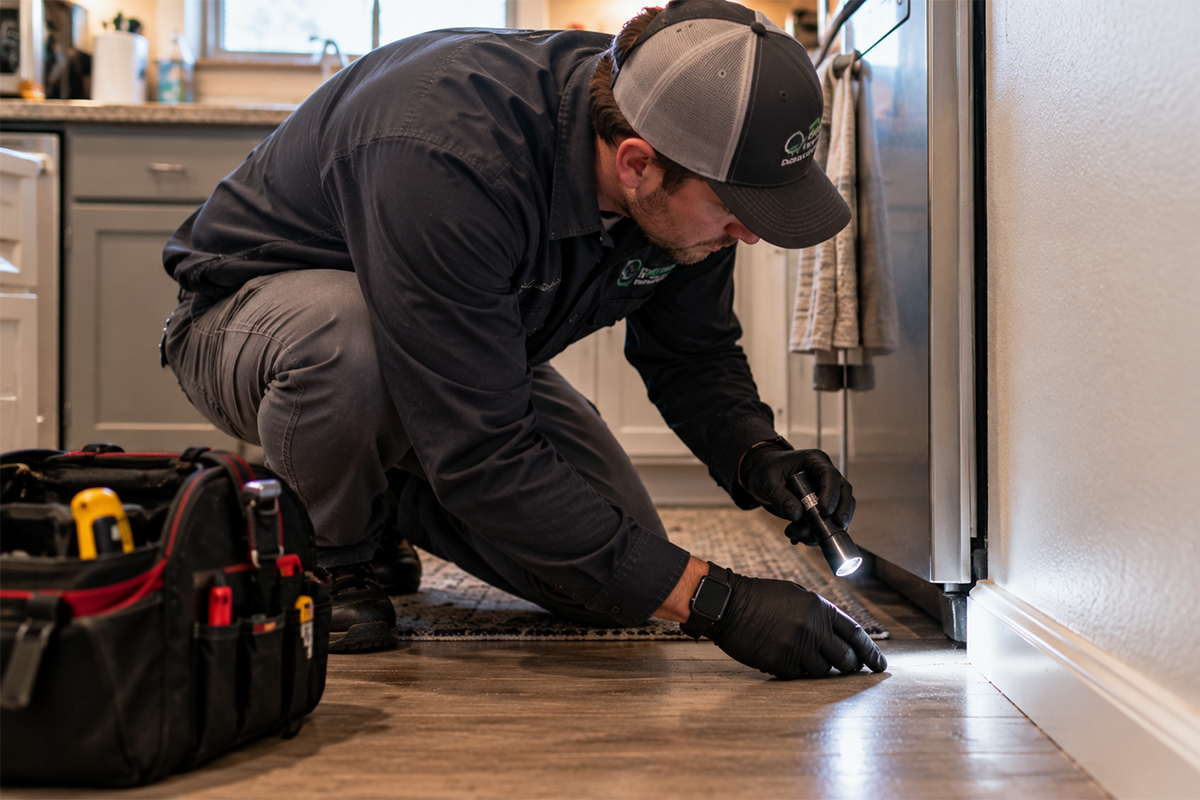
The most effective way to handle a cockroach problem in a multi-family Juneau property is through an Integrated Pest Management (IPM) approach, one that treats the building as a connected system rather than a collection of individual units. This typically involves inspecting adjoining apartments (not just the reporting unit), treating shared mechanical and utility spaces, sealing structural entry points between units, and following up with monitoring to confirm the problem doesn’t resurface.
This kind of coordinated treatment is far more effective (and often more cost-efficient in the long run) than repeatedly treating individual units as new complaints trickle in.
Don't Let One Unit's Problem Become Everyone's Problem
Cockroach infestations in apartment buildings rarely stay contained, and in a market like Juneau, with its aging buildings, shared infrastructure, and damp climate, a small problem in one unit can become a property-wide issue faster than most residents or landlords expect.
Alaska Pest Management has spent over 30 years helping Southeast Alaska property owners and residents get ahead of infestations before they spread. Our licensed technicians understand the unique challenges of multi-family housing in Juneau and provide building-wide inspection and treatment plans designed to solve the problem at its source, not just push it into the apartment next door.
If you’re a tenant, landlord, or property manager dealing with roach activity in a Juneau apartment building, request a quote online today!